
The Foundations of African American Education Under Jim Crow
Jim Crow segregation, while inherently oppressive, inadvertently allowed African American education to develop, albeit within the confines of systemic limitations. Educational opportunities for African Americans were often restricted to vocational training, which was prioritized over academic learning due to the institutional beliefs of the Jim Crow era. Vocational schools, though limiting in scope, were often the first African American educational institutions in their communities. Despite these constraints, schools like Baldwin County Training School (BCTS) became vital community centers, fostering a collective embrace of education. These institutions provided practical skills and created spaces where African American communities could unite, empower themselves, and lay the groundwork for future progress.[1]
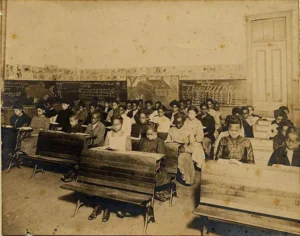
Vocational Education
Vocational education in African American schools became essential for equipping students with practical skills critical for economic independence and community resilience. With a curriculum focused on hands-on training in agriculture, carpentry, sewing, and domestic work—skills that matched available job opportunities in the rural South—these schools offered a path to stability amid the economic and social constraints of systemic racism and segregation. By blending vocational training with rudimentary literacy and arithmetic education, these schools gave African American students a foundation to navigate and succeed in the labor market despite limited career opportunities. In many rural Southern communities, these vocational schools were among the first educational institutions available to African Americans, representing an essential step toward educational access and opportunity.[2]
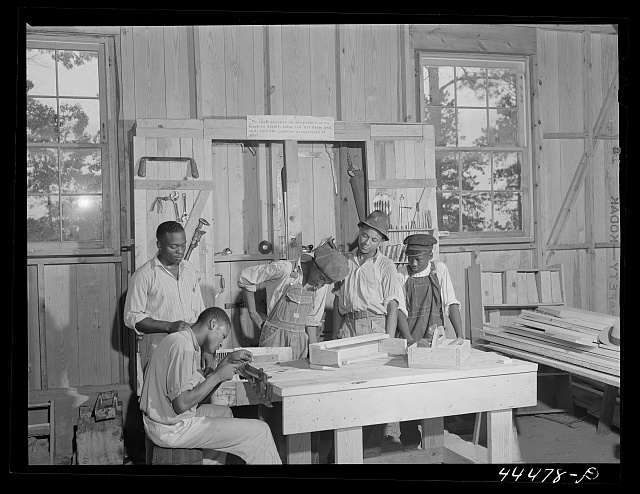
While vocational education represented a significant improvement over the complete denial of education, it was still used as a strategic tool to confine African Americans to fields and industrial labor roles. This system was designed and perpetuated by white legislators as a way to control the scope of Black education, ensuring that African Americans remained restricted to low-status, labor-intensive jobs.[3] By promoting vocational training as a form of “separate but equal” education, these efforts effectively denied African Americans access to a comprehensive academic curriculum that would have allowed for true intellectual and professional advancement. Thus, while vocational education provided basic skills, it simultaneously reinforced a social order that sought to maintain racial hierarchies and suppress Black aspirations for equality and empowerment.[4]
By offering only a rudimentary form of schooling emphasizing manual labor and basic trades, this system reinforced the belief that African Americans were incapable of higher intellectual pursuits. It provided a superficial appearance of education to appease demands for equality while systematically denying access to comprehensive academic subjects and critical thinking skills that could lead to genuine social mobility.[5] The focus on training for low-wage, menial jobs ensured that African Americans remained economically dependent and socially subordinated, preventing them from gaining the knowledge and skills necessary to challenge the entrenched racial and social hierarchies. In this way, vocational education perpetuated the ideology of white supremacy by reinforcing the idea that Black individuals were only fit for menial labor, thus maintaining the status quo.[6]
Vocational Education in Baldwin County
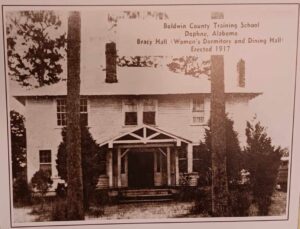
Vocational education led to the birth of the feeder school system in Baldwin County, establishing some of the first public African American schools in the area. Led by the Eastern Shore Missionary Baptist Association and supported by local churches, this system addressed both economic and social needs by equipping students with practical skills relevant to their community. Schools like the Baldwin County Training School provided essential training in trades and agriculture, preparing students for local jobs and promoting self-sufficiency. This network of feeder schools not only laid a foundation for Black education in the area but also connected students to advanced institutions, creating a support system that expanded opportunities despite limited resources and the restrictions of segregation. Through this approach, vocational education empowered students to gain valuable skills while fostering resilience and progress within their communities.[3]
Limitations With Vocational Education
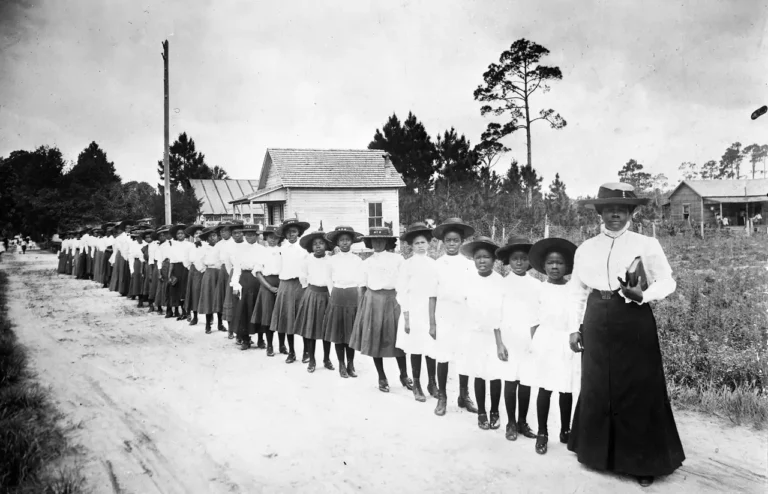
While vocational education provided practical skills and pathways to employment, it also had significant limitations, especially within rural African American communities like Baldwin County. Vocational programs often focused on manual labor or trades, such as agriculture and domestic work, which reinforced social and economic hierarchies by preparing Black students primarily for low-paying, labor-intensive jobs. This limited students’ access to broader academic and professional opportunities, as vocational curricula often excluded subjects needed for college preparation and career advancement. Additionally, the chronic underfunding of Black schools meant that even vocational programs were poorly resourced, with outdated equipment and limited materials. As a result, vocational education, though valuable in developing certain skills, ultimately restricted social mobility by narrowing the educational and occupational paths available to Black students, perpetuating a cycle of economic disadvantage.[5]
Footnotes
- George Charles “Life under the Jim Crow Laws, “Jim Crow An American Disgrace” San Diego: Lucent Books. 2000 Pg.10 Par 1
George Charles “Life under the Jim Crow Laws, “Jim Crow An American Disgrace” San Diego: Lucent Books. 2000 Pg.10 Par 2
George Charles “Life under the Jim Crow Laws, “Jim Crow An American Disgrace” San Diego: Lucent Books. 2000 Pg.10 Par 3
George Charles “Life under the Jim Crow Laws, “Jim Crow An American Disgrace” San Diego: Lucent Books. 2000 Pg.10 Par 4
George Charles “Life under the Jim Crow Laws, “Jim Crow An American Disgrace” San Diego: Lucent Books. 2000 Pg.11 Par 1