
The Anna T. Jeanes Foundation

Anna T. Jeanes, a white philanthropist, is best known for her efforts to improve education for rural African Americans in the South. Before her death in 1907, she established the Jeanes Fund, which supported the Jeanes Supervisors program across 16 southern states, including Alabama.[1] This initiative provided vital resources and training for rural Black schools, helping them enhance educational opportunities in underserved communities. The Jeanes Supervisors, often Black educators, played a crucial role in improving instruction and rallying community support for these schools. While Jeanes’ contributions significantly expanded access to education, her approach primarily focused on vocational training rather than academic advancement, preparing Black students for roles in agriculture and industry. Like other white philanthropists of the time, Jeanes did not seek to challenge the existing racial hierarchy. Though her efforts were positive, they ultimately reinforced the segregated social structure instead of advocating for full racial equality.[2]
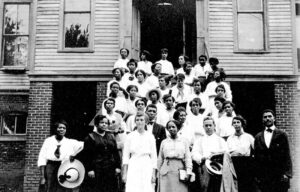
Throughout the segregated South, Jeanes teachers played a crucial role in educating African Americans, particularly in rural areas where resources were limited. Funded by the Jeanes Foundation, these African American educators, known as “Jeanes Supervisors,” traveled between schools to enhance the quality of instruction and support teachers working with minimal resources.[3] Their responsibilities extended beyond the classroom, as they organized community activities, promoted health and hygiene, and developed vocational programs tailored to rural communities’ agricultural and industrial needs. In many instances, Jeanes teachers were the sole providers of formal education in underserved areas, where Black schools were severely underfunded and lacked proper facilities. They raised educational standards for Black students by offering professional development and guidance. Their dedication to improving both academic and practical skills was instrumental in uplifting African American communities, fostering self-reliance, and preparing students for life under segregation. Despite the challenges of the Jim Crow era, Jeanes teachers worked tirelessly to ensure access to education in even the most marginalized areas.[4]
White philanthropy had a profound yet complex impact on Black education in the segregated South. By promoting vocational education, philanthropists like Julius Rosenwald and Anna T. Jeanes aimed to uplift African Americans within the constraints of the existing social order, ensuring they remained in roles that supported the agricultural and industrial sectors without challenging the racial hierarchy.[5] While these efforts improved access to education and practical skills, they often limited opportunities for academic advancement and professional growth. In Baldwin County, the influence of white philanthropy shaped the local Black education system, ultimately leading to the development of the county feeder school system. Schools like the Anna T. Jeanes School in Fairhope played a key role in this system, providing vocational training and basic education that laid the foundation for the broader educational network in the region.[6]
Footnotes
- https://encyclopediaofalabama.org/article/jeanes-supervisors/ par-2
- https://encyclopediaofalabama.org/article/jeanes-supervisors/ par-3
- https://encyclopediaofalabama.org/article/jeanes-supervisors/ par-4
- Finkelstein H. Norman. “Schools of Hope: How Julius Rosenwald Helped Change African American Education.” Pg.45 Par-2
- Finkelstein H. Norman. “Schools of Hope: How Julius Rosenwald Helped Change African American Education.” Pg.45 Par-3.
- Finkelstein H. Norman. “Schools of Hope: How Julius Rosenwald Helped Change African American Education.” Pg.45 Par-4