
The Rosenwald Foundation
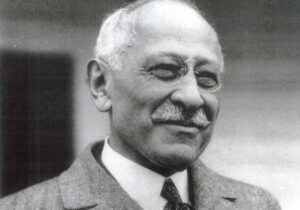
The Julius Rosenwald Fund, established in 1917, aimed to improve educational opportunities for African Americans in the segregated South, but it did so within the constraints of the Jim Crow system. While Rosenwald sought to address severe inequities, he shared the prevailing belief among white philanthropists of the era that vocational education, rather than academic training, was the most suitable path for Black students. Influenced by this perspective, the Fund primarily supported industrial and agricultural education to guide African Americans into positions that white society deemed appropriate.[6] By 1932, the Fund had supported the construction of over 5,300 schools, enhancing educational access but reinforcing the limited roles Black Americans were expected to fill. Despite these limitations, Rosenwald schools became symbols of community resilience and laid the groundwork for later segregation and educational inequality challenges.[7]

The Rosenwald Fund aimed to improve Black education in the South by building schools, despite operating within the constraints of Jim Crow laws. Julius Rosenwald supported vocational education, viewing it as the most practical way to help African Americans advance within a racially segregated society. His approach emphasized industrial and agricultural training to prepare Black students for roles deemed acceptable by white society at the time. Although Rosenwald contributed significant funding, the construction of these schools was a collaborative effort, often requiring local Black communities to raise a substantial portion through small donations, church collections, and community fundraisers.[8] While the Rosenwald Fund built Black schools across the South and helped address some educational inequities, it did not challenge the prevailing racial ideology. In many rural areas, these schools were the first established for Black students, becoming vital centers of learning and community pride, fostering a sense of ownership and laying the groundwork for future educational and civil rights activism.[9]
The GEB and Rosenwald Foundation, focused on preserving the South’s racial order, adopted a paternalistic approach to Black education that conformed to Jim Crow laws. Their support for industrial education was rooted in the belief that vocational training aligned with the era’s societal norms, effectively confining African Americans to low-wage agricultural work.[10] During this period, many African Americans were migrating to urban areas or seeking affordable land in rural regions, hoping to build new lives and escape the oppressive racial climate of the South. For many, education was seen as the key to achieving economic independence and self-sufficiency by acquiring skills that could secure better opportunities. However, the GEB and Rosenwald’s educational philosophy aimed to stabilize the southern economy by keeping African Americans in agricultural and industrial roles, benefiting the broader U.S. economy while restricting Black social mobility. By focusing on vocational training rather than academic advancement, this approach reinforced the racial hierarchy and limited opportunities for African Americans to use education as a means of upward mobility, ultimately discouraging political activism and deepening racial inequalities.[11]
Footnotes
- Hoffschwelle S. Mary. “The Rosenwald Schools of the American South.” Gainesville: University Press of Florida. 2014 Pg.10 Par-1
- https://www.julius-rosenwald-legacy.com/rosenwald-fund.html Par-1
- Hoffschwelle S. Mary. “The Rosenwald Schools of the American South.” Pg.10 Par-2
- https://www.julius-rosenwald-legacy.com/rosenwald-fund.html par-2
- Pritchett B. Jonathan “The Burden of Negro Schooling: Tax Incidence and Racial Redistribution in Postbellum North Carolina.” The Journal of Economic History 49, no. 4 1989 Pg.969 Par1-2 Pg.970 Par-1-2
- https://www.julius-rosenwald-legacy.com/rosenwald-fund.html par-3
- Hoffschwelle S. Mary. “The Rosenwald Schools of the American South.” Gainesville: University Press of Florida. 2014 Pg. 10 Par-1
- Hoffschwelle S. Mary. “The Rosenwald Schools of the American South.” Pg.10 Par-2
- Hoffschwelle S. Mary. “The Rosenwald Schools of the American South.” Pg.10 Par-2
- https://www.julius-rosenwald-legacy.com/rosenwald-fund.html pg.2 par-3
- https://www.julius-rosenwald-legacy.com/rosenwald-fund.html pg.2 par-4