How African American Communities' Funded Their Own Education Systems
While the effects of Jim Crow and segregation severely crippled the Black education system—leaving schools vastly underfunded, overcrowded, and poorly equipped compared to their white counterparts—African Americans persevered and built a network of community-funded and operated schools throughout the country. Even though these schools could never match the resources, facilities, or opportunities provided to white students, Black communities banded together to ensure their children received an education.[1] Through small donations, church collections, and volunteer efforts, they created schools that were often the heart of their communities. These schools provided academic instruction and a sense of pride, unity, and hope for future generations. The determination and resilience of these communities ensured that, even in the face of systemic inequality, African Americans could still strive for education and empowerment, laying the groundwork for future civil rights advancements.[2]
Freedmen Schools
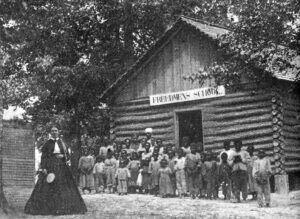
Freedmen’s schools, also known as Sabbath schools, were locally funded African American schools established and operated by Black communities in the aftermath of the Civil War. These schools arose in response to the urgent need for education among newly freed African Americans who had been denied formal learning under slavery. Run by local African Americans, they were often constructed with community labor and resources, with churches and civic leaders playing crucial roles in their development. Despite limited resources, these schools were instrumental in promoting literacy and primary education within Black communities.[3] They also marked one of the first widespread efforts by the Freedmen’s Bureau to elevate the status of African Americans in the post-Civil War United States, laying a foundation for educational and social advancement during Reconstruction. However, the schools were primarily funded by local religious organizations and heavily depended on community support, significantly hindering their ability to secure adequate resources. This reliance on small donations and volunteer labor limited their capacity to provide proper materials, facilities, and trained teachers. While these schools were essential for fostering education and self-sufficiency, their financial instability posed a significant challenge in delivering quality education, reflecting the broader difficulties of educating African Americans in the post-Civil War South.[4]
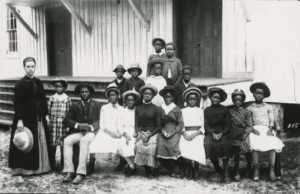
While these schools were often the first African American educational institutions in rural communities, they were severely constrained by the systemic limitations imposed by Jim Crow laws. Chronically underfunded and lacking essential resources, these schools struggled to hire trained teachers due to widespread discrimination and financial hardships. In response, local religious organizations stepped in to address these challenges, taking on the monumental task of funding and constructing these schools. They galvanized community support through grassroots efforts to raise money for building schoolhouses, purchasing supplies, and paying teachers’ salaries.[5] These religious organizations became a vital lifeline for education in rural areas, ensuring African American students had access to learning opportunities despite the pervasive inequities of segregation. Their unwavering efforts sustained these schools and laid a foundation for hope and progress, empowering communities facing systemic oppression.[6]
The Role of Religious Organizations
Religious organizations played a crucial role in funding and supporting Sabbath schools, serving as the driving force behind grassroots efforts to advance education for African Americans during segregation. These organizations mobilized their communities to gather resources, rally support, and raise funds to establish and sustain these vital schools. Their collective efforts went beyond purchasing essential materials, such as books and supplies; they also financed the construction of school buildings and provided salaries for teachers, ensuring the schools could operate and thrive despite the systemic inequities of the era. By harnessing the strength of community and faith, religious organizations laid a strong foundation for educational progress, empowering students with the knowledge and skills needed to pursue brighter futures in the face of the barriers imposed by Jim Crow.[7]
The local efforts of the Eastern Shore Missionary Baptist Association (ESMBA) and Macedonia Baptist Church in Baldwin County exemplify how African American education developed through grassroots initiatives, addressing the immediate needs of their communities. These efforts reflect a broader movement across the South, where similar local organizations worked tirelessly to create educational opportunities for African Americans in the face of segregation and the oppressive limitations of Jim Crow. However, these local initiatives were complemented and amplified by national efforts from organizations like the Alabama State Teachers Association (ASTA), which represented a collective drive to advocate for funding and resources for African American education.[8]
National philanthropic organizations and advocacy groups played a crucial role in supporting these grassroots efforts by providing financial aid, teacher training, and educational materials to sustain and grow schools for African Americans. These partnerships between local and national entities demonstrated a unified commitment to combating systemic inequities and empowering African American communities through education. Together, these efforts helped establish a foundation for progress, creating educational opportunities despite the significant challenges of the era.[9]
Footnotes
- Woodson Godwin Carter, Givens R. Jarvis, and Gates Louis Henry. “The Mis-Education of the Negro.” NY, NY: Penguin Books, an imprint of Penguin Random House LLC. 2023 Pg.8 Par-1
- Woodson Godwin Carter, Givens R. Jarvis, and Gates Louis Henry. “The Mis-Education of the Negro.” NY, NY: Penguin Books, an imprint of Penguin Random House LLC. 2023 Pg.8 Par-2
- Woodson Godwin Carter, Givens R. Jarvis, and Gates Louis Henry. “The Mis-Education of the Negro.” NY, NY: Penguin Books, an imprint of Penguin Random House LLC. 2023 Pg.8 Par-3
- Woodson Godwin Carter, Givens R. Jarvis, and Gates Louis Henry. “The Mis-Education of the Negro.” NY, NY: Penguin Books, an imprint of Penguin Random House LLC. 2023 Pg.8 Par-4
- Woodson Godwin Carter, Givens R. Jarvis, and Gates Louis Henry. “The Mis-Education of the Negro.” NY, NY: Penguin Books, an imprint of Penguin Random House LLC. 2023 Pg.9 Par-1
- Woodson Godwin Carter, Givens R. Jarvis, and Gates Louis Henry. “The Mis-Education of the Negro.” NY, NY: Penguin Books, an imprint of Penguin Random House LLC. 2023 Pg.9 Par-2
- Woodson Godwin Carter, Givens R. Jarvis, and Gates Louis Henry. “The Mis-Education of the Negro.” NY, NY: Penguin Books, an imprint of Penguin Random House LLC. 2023 Pg.9 Par-3
- Woodson Godwin Carter, Givens R. Jarvis, and Gates Louis Henry. “The Mis-Education of the Negro.” NY, NY: Penguin Books, an imprint of Penguin Random House LLC. 2023 Pg.9 Par-4
- Woodson Godwin Carter, Givens R. Jarvis, and Gates Louis Henry. “The Mis-Education of the Negro.” NY, NY: Penguin Books, an imprint of Penguin Random House LLC. 2023 Pg.10 Par-1