
White Philanthropy and Black Education: Progress or Control?
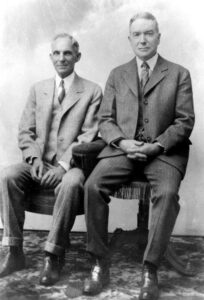
White philanthropists, such as John D. Rockefeller, were among the first to establish vocational schools aimed at advancing Black education, but their support was framed within the context of maintaining white supremacy. Rockefeller and others sought to improve education for African Americans, but they did so intending to keep it focused on practical, labor-intensive training rather than academic growth.[1] Their goal was not to empower Black communities for social or political advancement but to provide just enough education to pacify demands for equality while ensuring African Americans remained confined to subservient roles. An educated Black populace represented a potential threat to the power of white legislatures, so this approach strategically restricted access to broader academic subjects that could foster critical thinking and leadership skills, preserving the racial hierarchy under the guise of educational uplift. By shaping the curriculum to fit a segregated society, Rockefeller and other philanthropists reinforced a system designed to placate rather than promote true progress for African Americans.[2]
The Rockefeller Foundation
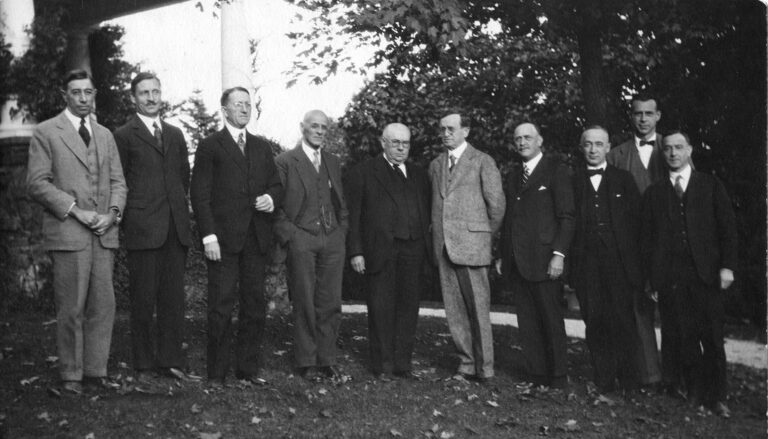
John D. Rockefeller, Jr. developed the idea for the General Education Board (GEB) after a Pullman train tour through the South in 1901, accompanied by other influential northern philanthropists like Henry Ford. Officially established in 1902 with $1 million in funding from his father, John D. Rockefeller, Sr., the GEB aimed to promote education in the United States “without distinction of race, sex, or creed.” However, despite its seemingly inclusive mission, the Board’s efforts—especially in the South—ultimately reinforced segregation by promoting a vocational model of Black education that limited opportunities for broader academic achievement.[3]
By 1907, John D. Rockefeller, Sr. had increased his contributions to the GEB to $43 million, making it the most significant philanthropic gift in U.S. history. His subsequent establishment of the Rockefeller Foundation in 1913, with an endowment of $182 million, would soon eclipse this record and set a new benchmark for charitable giving.[4] Throughout its existence from 1903 to 1964, the GEB allocated a total of $325 million toward educational initiatives across the United States, of which more than $60 million was specifically dedicated to advancing African American education in the segregated South, providing vital resources to historically underfunded institutions. The Board’s efforts had a transformative impact, promoting educational equity and laying the groundwork for future initiatives to address racial disparities in education.[5]
Footnotes
- George Charles “Life under the Jim Crow Laws, “Jim Crow Schools” Pg.38 Par 1-2
- https://resource.rockarch.org/story/black-education-and-rockefeller-philanthropy-from-the-jim-crow-south-to-the-civil-rights-era/ Par-1-2
- https://dimes.rockarch.org/collections/A3TK6aYJugBPweyGfaUsxJ Par-3
- George Charles “Life under the Jim Crow Laws,” “Jim Crow Schools” Pg. 38 Par 1-2
- https://resource.rockarch.org/story/black-education-and-rockefeller-philanthropy-from-the-jim-crow-south-to-the-civil-rights-era/ Par-1-2