
The Jim Crow South
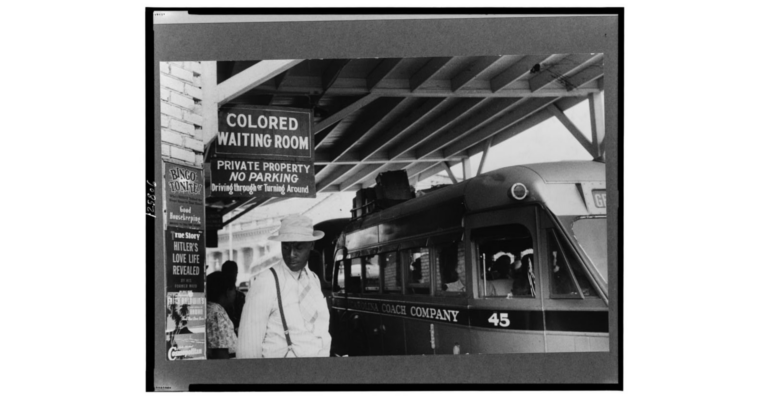
While BCTS offered a nurturing and supportive environment for its students, it’s crucial to acknowledge that its foundation was shaped by the systemic inequalities embedded in Jim Crow laws. This deeply entrenched system governed every aspect of African American life, and the education provided to Black students was inherently unequal, designed not to nurture intellectual growth but to confine them to vocational programs centered on manual labor and industrial skills.[1] These programs reinforced the racist belief that African Americans were only suited for low-status roles and were incapable of achieving the same academic or professional success as their white counterparts. These educational disparities were not accidental but rather a deliberate outcome of a racial ideology that permeated U.S. society. As a result, even though BCTS emerged as a place of learning and community, its purpose and structure were dictated by a system that sought to limit the growth, potential, and aspirations of Black students, thereby maintaining a social order rooted in white supremacy.[2]
The Belief in Segregation
The belief in segregation was created by the racial ideology in the United States, which sought to keep African Americans in an uneducated state to maintain control and prevent the rise of an empowered Black populace. This belief system, which underpinned the creation and enforcement of segregation, was based on the premise that different races were inherently unequal and that an educated Black community would pose a threat to the social and political dominance of whites.[3] By deliberately restricting access to quality education, white society aimed to prevent African Americans from gaining the knowledge and skills needed to challenge the status quo. This systemic suppression was seen as essential for preserving the established racial hierarchy and ensuring that African Americans remained in subservient roles, reinforcing the notion that their place in society was to serve rather than to lead.[4]
This ideology manifested itself in laws and policies designed to maintain racial boundaries and keep African Americans in subservient roles. The establishment of separate schools, transportation, and public facilities was not just a response to social attitudes, but a deliberate strategy to reinforce racial divisions and control the progress of the Black community.[5] This belief dictated that African Americans should be given limited education, primarily focusing on vocational training, which would keep them confined to labor-intensive occupations deemed appropriate for their supposed lower status. By embedding these discriminatory principles into law, white lawmakers ensured that segregation was not only a social custom but a legal mandate, shaping the structure of American society for generations.[6]
Plessy v. Fergusson
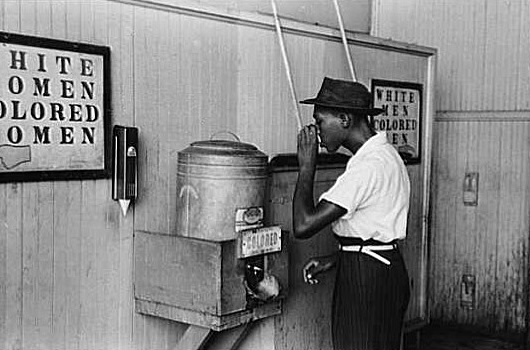
One such law was established by the 1896 Supreme Court ruling in Plessy v. Ferguson, which enshrined the doctrine of “separate but equal” into American law, legitimizing the segregation of public facilities—including schools—based on race. The ruling reinforced the belief that maintaining separate facilities for Black and white Americans was not only legal but also socially acceptable as long as they were purportedly of equal quality.[7] In reality, however, this “separate but equal” doctrine became the foundation for sustaining racial divisions across nearly every public institution, creating a deeply entrenched system of segregation. This decision solidified the segregated nature of the school system. It resulted in severe inequalities in Black education that persisted for decades, depriving African Americans of access to quality resources and opportunities.[8]
Inequalities in the Education System
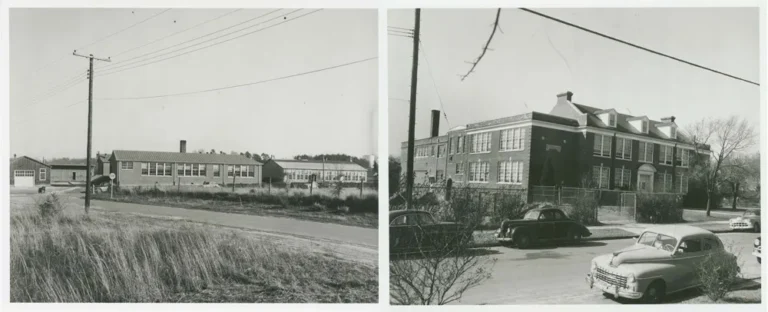
Segregation had a devastating impact on African American school systems, creating an environment that not only deprived Black students of quality education but also reinforced feelings of inferiority and marginalization. Under the “separate but equal” doctrine, Black schools were supposed to receive the same level of funding and resources as white institutions. Still, in practice, they were systematically neglected, a reflection of the deeply ingrained racial biases that shaped every aspect of Southern society.[9] This inequity extended beyond just the material deficiencies; it sent a clear message to Black students that their education—and, by extension, their potential—was valued less than that of their white peers. The persistent neglect and exclusion diminished students’ self-worth, limited their aspirations, and fostered a sense of powerlessness, deeply affecting their mental well-being and shaping how they viewed their role and future in society.[10]
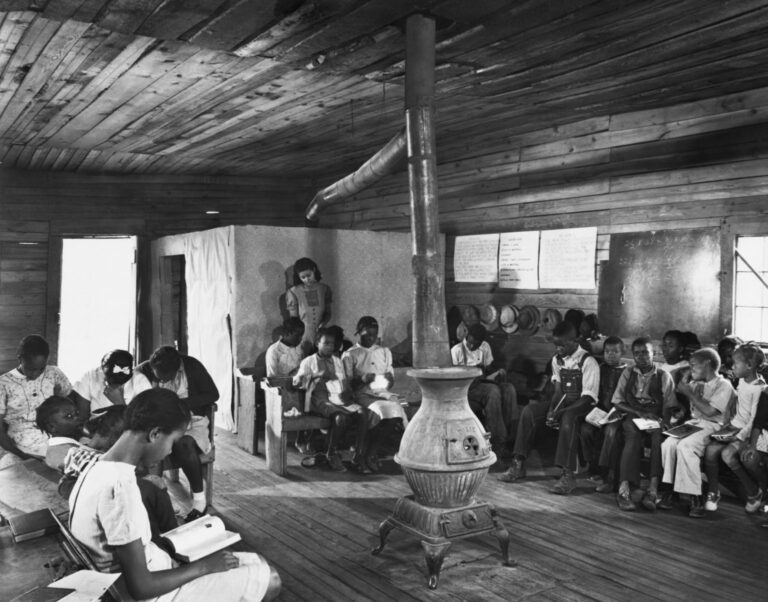
African American education was marked by severe inequalities, with Black schools receiving only a fraction of the funding allocated to white institutions, resulting in overcrowded classrooms, outdated materials, and inadequate facilities. Black students were often funneled into vocational programs that emphasized manual labor and domestic skills, denying them access to the comprehensive academic curriculum available to their white counterparts.[11] These disparities were further reinforced by discriminatory policies that ensured Black teachers were paid significantly less, despite often working in more challenging conditions. Community-run Black schools, like those found in rural areas of the South, were often forced to operate in dilapidated buildings with leaky roofs, broken windows, and insufficient classroom space. Many of these institutions lacked basic necessities such as indoor plumbing, heating, or adequate lighting.[12]
Footnotes
- Fremon K. David, “The Jim Crow Laws and Racism in American History.” Berkeley Heights, NJ: Enslow Publishers. 2000 Pg.18 Par-1
- Fremon K. David, “The Jim Crow Laws and Racism in American History.” Pg.19 Par-1
- Fremon K. David, “The Jim Crow Laws and Racism in American History.” Pg.20 Par-2
- Fremon K. David, “The Jim Crow Laws and Racism in American History.” Pg.21 Par-2
- Fairclough Adam. “Being in the Field of Education and Also Being a Negro Seems Tragic’: Black Teachers in the Jim Crow South.” The Journal of American History 87, no. 1 2000: 65–91. https://doi.org/10.2307/2567916. Pg.29 Par-2
- Fairclough Adam. “Being in the Field of Education and Also Being a Negro Seems Tragic’: Black Teachers in the Jim Crow South.” The Journal of American History 87, no. 1 2000: 65–91. https://doi.org/10.2307/2567916. Pg.30 Par-1
- Parker H. Marjorie “Some Educational Activities of the Freedmen’s Bureau.” Pg.15 Par-4
- Fairclough Adam. “Being in the Field of Education and Also Being a Negro Seems Tragic’: Black Teachers in the Jim Crow South.” Pg.66 par-4
- Fairclough Adam. “Being in the Field of Education and Also Being a Negro Seems Tragic’: Black Teachers in the Jim Crow South.” Pg.67 par-1-2
- Fairclough Adam. “Being in the Field of Education and Also Being a Negro Seems Tragic’: Black Teachers in the Jim Crow South.” Pg.68 par-1-2
- Levine C. Bruce. “The Fall of the House of Dixie: The Civil War and the Social Revolution That Transformed the South.” New York: Random House. 2014 Pg.385 Par-4
- Levine C. Bruce. “The Fall of the House of Dixie: The Civil War and the Social Revolution That Transformed the South.” New York: Random House. 2014 Pg.386 Par-1-2
- Fleischman, Richard, Tyson Thomas, and Oldroyd David “THE U.S. Freedmen’s BUREAU IN POST-CIVIL WAR RECONSTRUCTION.” Pg.83 par 3-4
- Fleischman, Richard, Tyson Thomas, and Oldroyd David “THE U.S. Freedmen’s BUREAU IN POST-CIVIL WAR RECONSTRUCTION.” Pg.84 par 1-2
- Fleischman, Richard, Tyson Thomas, and Oldroyd David. “THE U.S. FREEDMEN’S BUREAU IN POST-CIVIL WAR RECONSTRUCTION.” Pg.85 1-2
- Fleischman, Richard, Tyson Thomas, and Oldroyd David. “THE U.S. FREEDMEN’S BUREAU IN POST-CIVIL WAR RECONSTRUCTION.” Pg.86 Par-1-2