
BCTS During Segregation
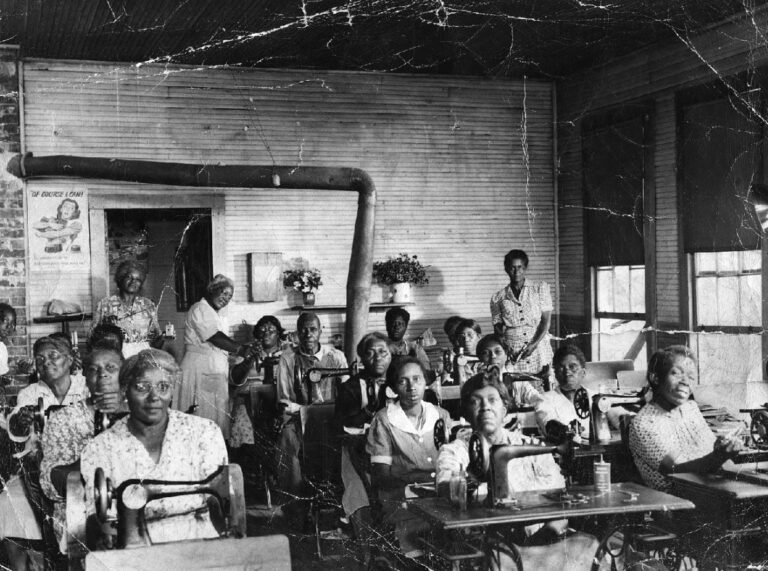
Following Ligon A. Wilson’s retirement, BCTS entered a period of relatively slow development under the leadership of principals Robert Thurston and John Jackson. Principal Thurston focused on teaching practical skills such as farming and industrial trades, aligning the curriculum with the vocational needs of the time. As a private institution, the school was compelled to prioritize vocational education, a necessity driven by limited resources and the systemic constraints of segregation. However, despite these challenges, the school overcame many funding obstacles imposed by Jim Crow, thanks to Reverend S.B. Bracy’s success with the ESMBA. Bracy’s ability to secure support from various donors provided essential resources, including schoolbooks and funding for construction projects, ensuring that BCTS continued to grow and serve its students effectively.[1]
During Principal Robert Thurston’s tenure, BCTS experienced steady growth as the student body continued to expand. To accommodate this increase, Thurston oversaw the construction of a new frame structure, utilizing student labor to complete the project. This building was designated as the home economics facility, where students received hands-on training in essential domestic skills. Thurston’s efforts addressed the growing school’s immediate needs and reflected its broader mission to equip students with practical knowledge while fostering a spirit of self-reliance and community collaboration.[2]
National Organizations Focus on BCTS
During this period, the actions of the ESMBA and the growing success of BCTS began to attract attention from philanthropic organizations and influential figures, including the Jeanes Fund. The Jeanes Foundation, represented by B.C. Colwell, recognized BCTS’s potential to influence African American education in the region. Colwell, like many white leaders of the time, viewed vocational training as essential for developing a workforce to support the South’s agricultural and industrial economy. While this cross-racial support helped sustain BCTS, it was often rooted in preserving the status quo, confining Black education to labor-focused pathways. Despite these limitations, BCTS earned recognition for its exceptional academic achievements, posting some of the highest scores on the Eastern Shore.[3]
Rev. S.B. Bracy’s collaboration with Dr. Gregg and Colwell further elevated the school’s profile, drawing the interest of J.S. Lambert, the former superintendent of Baldwin County. Lambert, like other white officials, saw BCTS as a means to influence and control the scope of African American education, keeping it focused on vocational training. In 1933, Lambert, accompanied by representatives from the Jeanes Foundation and the Rosenwald School system, inspected BCTS to ensure its curriculum aligned with white-imposed standards. While this visit reinforced systemic inequities, it also secured financial support from the Jeanes Foundation. This support included a separate fund, which required ESMBA members to contribute to ensure salaries for Black teachers—a burden not placed on white educators, whose pay came directly from the state. These developments highlighted the structural inequalities within seemingly supportive initiatives, even as they enabled BCTS to grow and continue serving as a vital educational institution for African Americans in Baldwin County.[4]
Footnotes
- Fri, Dec 14, 1923.” Fairhope Courier pg.1 Pg-1
- Danly Nancy “The History of Baldwin County Training School” 2009 pg.9 par-1
- Mon, Dec 10, 1933.” Fairhope Courier Pg-1 par-1
- Mon, Dec 10, 1923.” Fairhope Courier Pg-1 par-2