The Eastern Shore Missionary Baptist Association
The Eastern Shore Missionary Baptist Association (ESMBA) emerged from Reverend S.B. Bracy’s determination to address the systemic injustices of Jim Crow. As pastor of Macedonia Baptist Church, Bracy witnessed how segregation and discrimination denied African American children access to quality education. He recognized that without local intervention, the institutional inequities of the era would continue to leave Black communities at a disadvantage. Bracy envisioned a solution in the form of a locally funded educational network, designed to empower African American children by providing opportunities for learning, vocational training, and personal growth.[1]
In 1919, Bracy gathered pastors from across Alabama to establish the ESMBA, uniting local churches around the shared goal of creating a feeder school system. Bracy believed that collective efforts could overcome the limitations imposed on individual communities, and his plan centered on building schools that would provide foundational education and vocational training. These schools aimed to equip African American students with the skills needed to achieve economic self-sufficiency and to prepare them for further education at institutions like Baldwin County Training School (BCTS), which served as a model for the initiative.[2]
Bracy and the Feeder School System
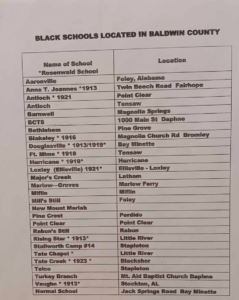
Under Bracy’s leadership, the ESMBA expanded its reach beyond Baldwin County, rallying support and resources from neighboring counties along the Eastern Shore. Their grassroots efforts resulted in the construction of 23 schools, many of which became the first African American educational institutions in their communities. These schools were more than educational spaces—they were symbols of resilience, progress, and hope. Bracy’s vision not only challenged the constraints of segregation but also created a sustainable network of schools that empowered future generations to rise above the limitations of Jim Crow and secure brighter futures.[3]
Established in 1916, the Eastern Shore Missionary Baptist Association (ESMBA) quickly began promoting and funding the creation of African American schools throughout Baldwin County. Recognizing the urgent need for accessible education within Black communities, the ESMBA collaborated with local churches to establish a feeder school system that provided foundational education and vocational training in trades and agriculture. Schools like the Baldwin County Training School equipped students with practical skills that supported both local economic growth and individual self-sufficiency. By linking small, rural schools to a cohesive network, the feeder school system allowed these institutions to share staff, resources, and best practices, creating a unified effort to improve educational standards across the county and the rural South. This collaboration broadened educational access and fostered resilience, self-determination, and a strong community identity among Black students and families. The ESMBA’s efforts laid a foundation for a lasting legacy of Black education in Baldwin County, empowering students to thrive despite the barriers of segregation and limited resources.[4]
The Eastern Shore Missionary Baptist Association (ESMBA) was established with the support and leadership of local African American communities, particularly through the efforts of one of the first African American churches in Daphne, Macedonia Baptist Church. This church became the foundation for the ESMBA’s mission, providing not only spiritual guidance but also a base for community-driven efforts to improve education and address systemic inequities. Macedonia Baptist Church’s dedication to progress, under the leadership of Reverend S.B. Bracy and others, served as a catalyst for the creation of the Eastern Shore Industrial School, later known as Baldwin County Training School (BCTS).[4]
Macedonia Baptist Church: A Pillar of Faith and Community
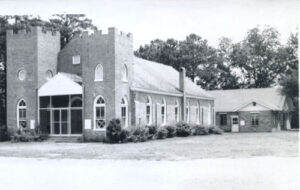
Macedonia Baptist Church, founded during the Reconstruction Era in 1879, became a cornerstone of faith and resilience for the African American community in Daphne. Established by a group of farsighted leaders, including William Bailey, Sr., Aaron Bryant, and Anthony Currie, the church was created to provide a place of worship and a center for communal growth. Reverend A.A. Williams served as its first pastor, laying the foundation for the church’s long-standing legacy. In 1885, Reverend S.B. Bracy, who would lead the church for an impressive 38 years, rebuilt the church and transformed it into a center of spiritual and social activism. Under his leadership, Macedonia Baptist Church became the driving force behind the establishment of the Eastern Shore Industrial School, demonstrating its commitment to education and community empowerment.[5]
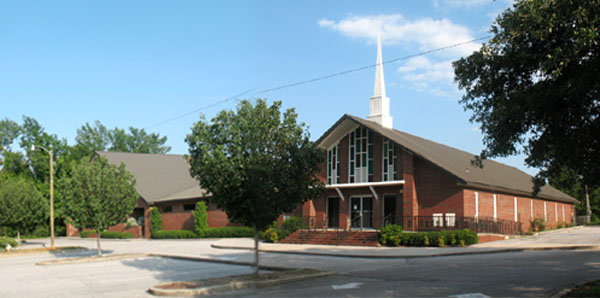
Throughout its history, Macedonia Baptist Church continued to evolve under successive pastors. Each brought unique contributions, such as organizing auxiliaries, fostering youth involvement, and introducing structural improvements like constructing an indoor baptistery. Despite challenges like the decline in membership during World War II, the church remained a beacon of hope, adapting to the needs of its congregation and continuing to inspire positive change in the community. Macedonia Baptist Church’s legacy of leadership, faith, and dedication to education played a pivotal role in shaping the future of Baldwin County and the Eastern Shore.[6]
Footnotes
- http://Jun 27, 1919, Page 2 – Fairhope Courier Par-2 Daphne Black Education Museum W.J. Carroll Fairhope Courier Ed Brock July 1994. Museum Exhibit 1919 Pg.1 Par-1-2
- http://Jun 27, 1919, Page 2 – Fairhope Courier Par-2 Daphne Black Education Museum W.J. Carroll Fairhope Courier Ed Brock July 1994. Museum Exhibit 1919 Pg.1 Par-3
- http://Jun 27, 1919, Page 2 – Fairhope Courier Par-2 Daphne Black Education Museum W.J. Carroll Fairhope Courier Ed Brock July 1994. Museum Exhibit 1919 Pg.1 Par-4
- http://www.macedoniabaptistchurch-daphne.com/aboutus.html par-1
- http://www.macedoniabaptistchurch-daphne.com/aboutus.html par-2
- http://www.macedoniabaptistchurch-daphne.com/aboutus.html par-3